0122884 Piab piINLINE Micro Xi Vacuum Generator: Global Buyer's Guide 2026
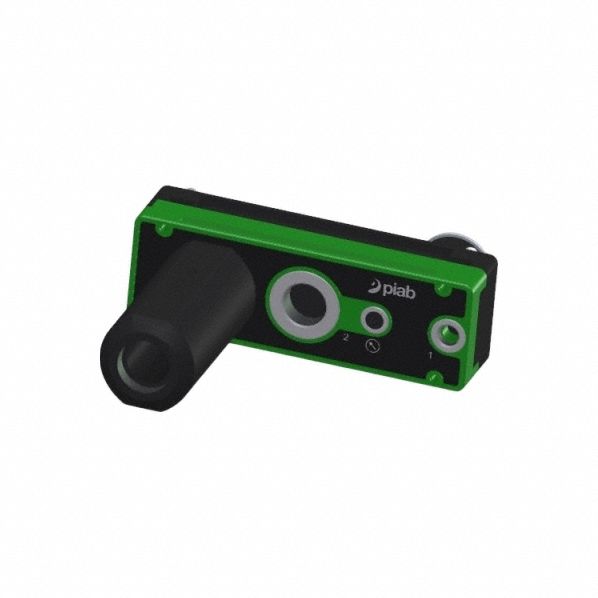
Table of Contentsexpand_more
The 0122884 Piab piINLINE Micro Xi vacuum generator is a single-stage compressed-air ejector that creates vacuum at the point of use, eliminating long vacuum lines and the pressure losses they cause. It is specified by port size, vacuum flow and supply pressure, and is typically chosen for high-speed, low-weight pick-and-place tasks in packaging and assembly automation.
What is a piINLINE Micro Xi vacuum generator?
A piINLINE Micro Xi vacuum generator is a PIAB in-line ejector that converts compressed air into vacuum using the Venturi principle, mounted directly in the vacuum circuit rather than remotely at a central pump. Because it sits at the suction point, response time is short and air consumption is predictable.
PIAB builds these units in the piINLINE family alongside the piClassic multi-cartridge generators and the LC level compensators, giving system designers a consistent vacuum-generation platform across a machine. The Micro Xi variant is the compact end of that range, aimed at small-part handling where space at the gripper is tight.
According to PIAB piINLINE product documentation: "piINLINE vacuum generators are designed for installation directly in the vacuum line, close to the suction point, to minimise cycle time and air consumption."
How does a piINLINE Micro Xi vacuum generator work?
Filtered compressed air enters the ejector and is accelerated through a narrow nozzle. The resulting high-velocity jet entrains air from the vacuum port, creating the suction that grips the workpiece. Exhaust air is discharged through the body or a silencer port.
Because there are no moving parts in the vacuum-generating stage, service life is governed mainly by air quality and the condition of seals and silencers. Contaminated or wet air is the most common cause of reduced vacuum flow and premature wear.
0122884 Piab piINLINE Micro Xi specifications
The table below summarises the measurable attributes buyers should confirm before ordering. Values reflect PIAB piINLINE and piClassic family data available in the 3G Electric catalog; confirm the exact 0122884 configuration with our team at quote stage.
| Attribute | Value / Range | Notes |
|---|---|---|
| Product type | In-line compressed-air vacuum generator (ejector) | PIAB piINLINE family |
| Maximum supply pressure | 101.5 psi (7 bar) | Per PIAB piClassic/piINLINE catalog data |
| Port connections | G 1/8 in to G 1 in (family range) | Confirm exact port size for 0122884 |
| Body material | Si (silicon-based composite) on comparable PIAB units | Verify for Micro Xi variant |
| Mounting | In-line, at or near suction point | Minimises line losses |
| Power supply | None (pneumatic); 50 Hz / 60 Hz compressor-side | No electrical supply required |
| Typical applications | Pick-and-place, packaging, assembly | Small-part handling |
Which PIAB vacuum generator type suits your application?
PIAB offers three broad approaches in the vacuum-generation and handling space, and choosing the right one is the single biggest factor in cycle-time and air-consumption performance.
- In-line generators (piINLINE): mounted at the suction point for fast response and low line losses — best for high-speed, distributed handling.
- Multi-cartridge generators (piClassic): higher vacuum flow from a central or manifold location — best for larger pads or multiple suction points.
- Level compensators (LC): spring or stroke-based buffers that absorb height variation between the gripper and the workpiece — best where part height varies.
In practice, a packaging line often combines all three: a piINLINE generator at each gripper, a piClassic generator feeding a manifold, and LC buffers to absorb stack-height variation.
Selection criteria for a piINLINE Micro Xi vacuum generator
- Port size and connection: match the ejector's G-thread ports to your existing vacuum line; mismatched ports force adapters that add leak paths.
- Vacuum flow vs. workpiece: size the generator to the suction cup area and the porosity of the part — porous or textured parts need more flow.
- Supply pressure: confirm your plant air is regulated to the generator's rated maximum (PIAB units in this family are rated to 101.5 psi / 7 bar).
- Air quality: specify filtration and drying appropriate to the ejector; contaminated air shortens silencer and seal life.
- Duty cycle: high-cycle pick-and-place benefits from in-line mounting; low-cycle tasks may suit a central generator.
- Environment: check ambient temperature, washdown exposure and any ATEX or cleanroom requirement before specifying.
- Export and voltage context: pneumatic generators are voltage-independent, but any control valves or sensors on the same machine must be specified for the destination's 50 Hz or 60 Hz supply.
Product selection ladder: PIAB vacuum components in stock
The table below compares PIAB vacuum components available from 3G Electric, arranged from level-compensation accessories through to higher-flow generators.
| Model | Type | Key specs | Best for |
|---|---|---|---|
| PIAB LC16-F1820 Level Compensator | Non-rotating vacuum buffer | 20.07 mm stroke; G 1/8 male in, G 1/8 female port | Light-duty height compensation in pick-and-place |
| PIAB LC16-M1835 Level Compensator | Non-rotating vacuum buffer | 35.05 mm stroke; G 1/8 male connections; M16 thread | Longer-stroke level compensation in packaging and assembly |
| PIAB piClassic PCL Two-Cartridge Vacuum Generator | Multi-cartridge vacuum generator | Si body; 1/4 in G female and 3/4 in G female; max 101.5 psi | Central vacuum generation for material handling |
| PIAB piClassic PCL.S4BN.S.AB.SV Vacuum Generator | Vacuum generator with silencer and gauge | Si body; 1/4 in G female inlet, 1 in G female outlet; max 101.5 psi; includes G1 in male silencer and vacuum gauge | Higher-flow central generation with integrated silencing and monitoring |
Step up the ladder when your suction-cup area grows, when you consolidate multiple grippers onto one generator, or when you need integrated silencing and vacuum monitoring. Step down to a compact in-line unit such as the 0122884 piINLINE Micro Xi when the priority is fast response at a single, small suction point.
Why source PIAB vacuum generators from 3G Electric?
3G Electric stocks 30 products in related categories and supplies PIAB vacuum buffers, piClassic generators and piINLINE in-line generators to buyers worldwide. With 35+ years of industrial supply experience, we interpret your demand, confirm the correct configuration, and quote against your application rather than a catalog page.
We ship internationally with export documentation experience and incoterms-neutral supply, so buyers in Europe, the Americas, Asia-Pacific and the Middle East receive consistent paperwork and lead-time visibility. Our technical team supports sizing, port matching and air-quality recommendations before you commit to an order.
Frequently asked questions
What is the 0122884 Piab piINLINE Micro Xi used for?
It is used to generate vacuum directly at the suction point in pick-and-place, packaging and assembly automation. In-line mounting shortens the vacuum path, improving response time and reducing air consumption compared with a remotely mounted generator.
How do I select the right PIAB vacuum generator?
Match port size to your vacuum line, size vacuum flow to the suction-cup area and part porosity, and confirm supply pressure against the generator's rated maximum. Then check duty cycle, air quality and environment before specifying.
What supply pressure do PIAB vacuum generators require?
PIAB piClassic and piINLINE family units in the 3G Electric catalog are rated to a maximum supply pressure of 101.5 psi (7 bar). Regulate plant air below this figure and filter it to protect seals and silencers.
Can I buy the 0122884 Piab piINLINE Micro Xi for delivery in Worldwide?
Yes. 3G Electric supplies PIAB vacuum components internationally with export documentation experience and incoterms-neutral terms. Contact us with your destination and quantity for a lead time and USD quote.
Do PIAB vacuum generators need a 50 Hz or 60 Hz power supply?
No. PIAB piINLINE and piClassic vacuum generators are pneumatic and require no electrical supply. However, any control valves, sensors or PLCs on the same machine must be specified for the destination's 50 Hz or 60 Hz supply.
What is the difference between piINLINE and piClassic generators?
piINLINE generators mount directly in the vacuum line at the suction point for fast response on small parts. piClassic multi-cartridge generators produce higher vacuum flow from a central or manifold location, suiting larger pads or multiple suction points.
Key takeaways
- The 0122884 Piab piINLINE Micro Xi is a compact in-line compressed-air vacuum generator for small-part handling.
- PIAB piINLINE and piClassic units in the 3G Electric catalog are rated to 101.5 psi (7 bar) maximum supply pressure.
- Choose in-line generators for fast response; choose multi-cartridge generators for higher vacuum flow.
- Pair generators with LC level compensators where workpiece height varies.
- 3G Electric supplies PIAB vacuum components worldwide with technical sizing support and export documentation.
Ready to specify? Contact 3G Electric for a USD quote, sizing assistance and technical support on the 0122884 Piab piINLINE Micro Xi and the wider PIAB vacuum range.
![408VK4 Bottle, 100ml, Clear, Graduated, Glass — Global Buyer's Guide [2026]](https://oxalncjenpflyqfncuhe.supabase.co/storage/v1/object/public/product-assets/grainger/45f842b2-22f9-462a-9f69-de7008287cd8.jpg)